

Discover Sunggongsa Temple: A Peaceful Buddhist Retreat in Korea
Are you seeking a tranquil escape to experience Korea’s rich Buddhist culture amidst beautiful natural scenery? Sunggongsa Temple in Gongju offers visitors an immersive spiritual journey, featuring Korea’s largest seated Buddha and a unique outdoor temple layout. Whether you’re interested in exploring traditional Buddhist architecture, participating in prayer rituals, or simply enjoying serene nature, this temple provides a perfect destination for cultural and spiritual enrichment.
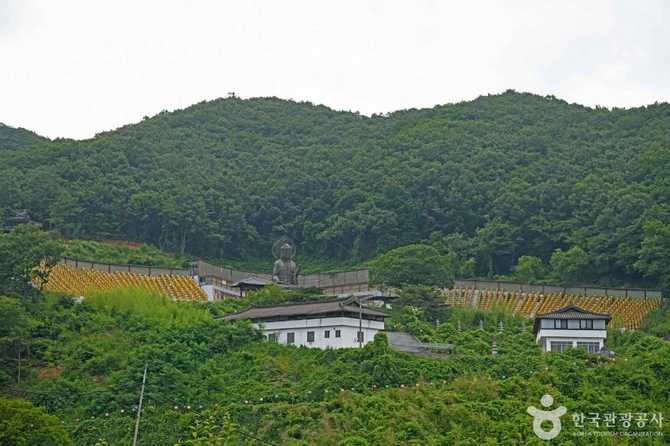
Located in the scenic region of Gongju, Sunggongsa Temple has been welcoming visitors since its construction began in 1982. The temple’s highlight is the 18-meter tall seated Buddha, which is the largest of its kind in Korea, along with a stunning array of Buddha statues and traditional pagodas. The temple’s 천불전 (Heavenly Buddha Hall) houses over 333,333 luminous Buddha images, making it a renowned site for prayer and reflection. Unlike conventional temples, Sunggongsa’s open-air layout allows visitors to experience Buddhism in harmony with nature, creating a peaceful atmosphere ideal for meditation and spiritual practice.

At a glance
- Who is this for?
-
- Travelers interested in Korea’s Buddhist culture and history
- Visitors seeking peaceful natural settings for meditation and reflection
- Tourists exploring religious sites in Korea
- Individuals curious about traditional Korean temple architecture
- Key takeaways
-
- Located in Gongju, South Chungcheong Province
- Construction started in 1982; major structures completed in 2006
- Features Korea’s largest seated Buddha at 18 meters tall
- Open year-round with free admission and ample parking
- Unique outdoor layout with numerous Buddha statues and pagodas
- Tips & cautions
-
- Wear comfortable, weather-appropriate clothing and shoes
- Observe temple etiquette; speak quietly and respectfully
- Avoid photography inside sacred areas unless permitted
- Bring personal supplies for a comfortable visit, especially in warmer months
- Bottom line
- Sunggongsa Temple offers a harmonious blend of natural beauty and Buddhist spirituality, making it an ideal destination for reflection and cultural exploration in Korea.
Sunggongsa Temple, nestled in the scenic surroundings of Gongju, is a remarkable Buddhist site that beautifully combines Korea’s spiritual traditions with stunning natural landscapes. Since its founding in 1982 by the head monk Gwanmuk, the temple has grown into a major pilgrimage and tourist destination. Its most iconic feature is the 18-meter tall seated Buddha, a symbol of peace and enlightenment, which stands prominently in the temple grounds. The temple’s 천불전 (Heavenly Buddha Hall) is home to over 333,333 Buddha images that glow in the dark, creating a mesmerizing sight for visitors and worshippers alike.
Unlike traditional enclosed temples, Sunggongsa’s open-air design allows visitors to walk among Buddha statues and pagodas in a natural setting, fostering a sense of harmony with nature. The temple is open throughout the year, free of charge, and provides ample parking facilities. Whether you’re here for spiritual practice, sightseeing, or simply seeking tranquility, Sunggongsa offers a unique experience that combines Korea’s religious heritage with breathtaking scenery.
In the following sections, you will find detailed information about the temple’s history, main structures, visiting tips, and practical guidance to help you plan your visit to Sunggongsa Temple effectively.
Sunggongsa Temple Overview & Location
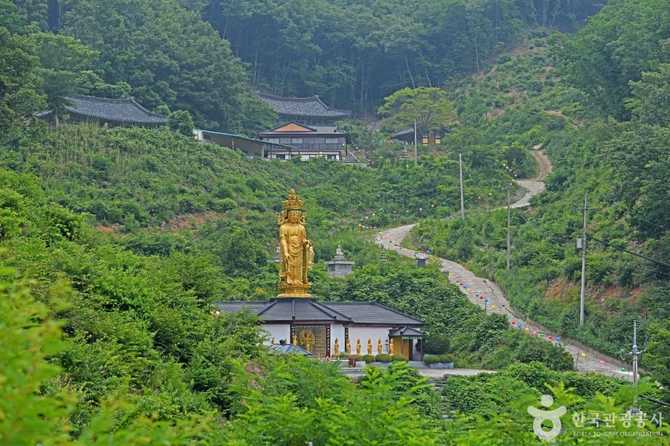
Sunggongsa Temple is a renowned Buddhist site located in Gongju, South Chungcheong Province, South Korea. As a spiritual sanctuary that harmonizes natural beauty with traditional Buddhist architecture, Sunggongsa offers visitors a peaceful retreat for reflection, prayer, and cultural exploration. The temple’s focus on outdoor layout and open-air structures makes it a unique destination among Korea’s many historic temples. Established in 1982, the temple has grown into a significant pilgrimage site, especially known for its impressive 18-meter tall seated Buddha, which is the largest of its kind in Korea.
Situated in a scenic valley surrounded by lush greenery, Sunggongsa is easily accessible from Gongju city center. The address is 371 Seonggok-gil, Useong-myeon, Gongju-si, Chungcheongnam-do. Visitors can reach the temple via public transportation or by car, with ample free parking available on-site. The temple’s construction began in 1982 under the leadership of the head monk Gwanmuk, and major structures such as the Heavenly Buddha Hall (천불전) and the main pagoda were completed by 2006. These structures are designed to blend seamlessly with the natural environment, creating a tranquil atmosphere conducive to meditation and spiritual practice.
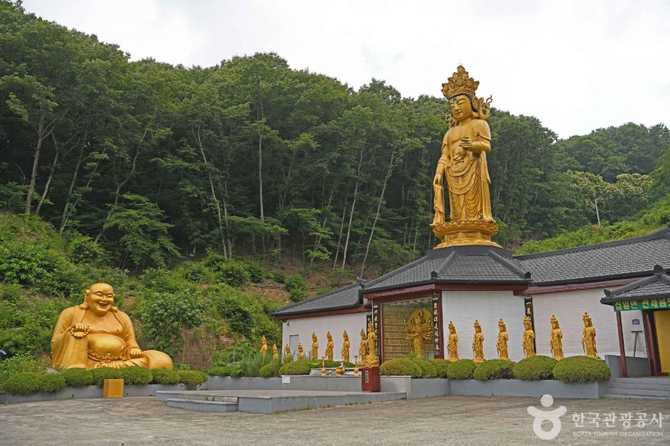
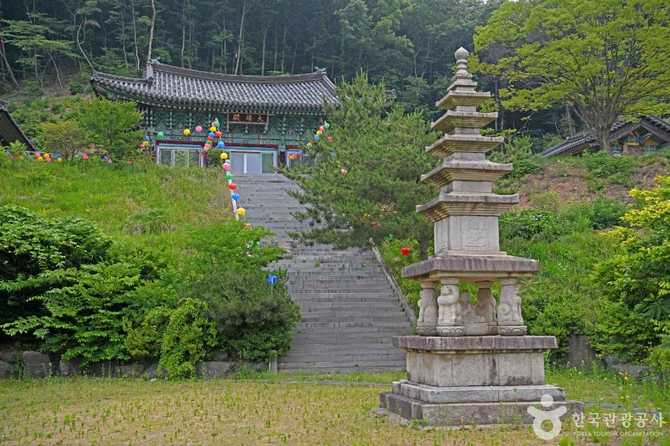
The temple’s main attraction is the 천불전 (Heavenly Buddha Hall), which houses over 333,333 luminous Buddha images, creating a mesmerizing sight at night. The hall also features a large, glowing Buddha statue and a sacred space for prayer and reflection. Nearby, the 관음전 (Gwaneum Hall) contains statues of the Bodhisattva Avalokiteshvara (Gwaneum), along with other Buddha images, emphasizing compassion and wisdom. The outdoor layout includes numerous large Buddha statues, traditional pagodas, and stone lanterns, all set amidst nature, making it an ideal spot for contemplative walks and outdoor meditation sessions. The open-air design of Sunggongsa allows visitors to experience Buddhism in harmony with the natural environment, fostering a sense of serenity and spiritual connection.
Comparison of Main Structures & Buddha Statues at Sunggongsa Temple
| Structure Name | Main Features | Notable Details |
|---|---|---|
| 천불전 (Heavenly Buddha Hall) | Houses over 333,333 luminous Buddha images and a large seated Buddha | Features a glowing Buddha statue at night, used for prayer and reflection |
| 관음전 (Gwaneum Hall) | Contains statues of Bodhisattva Avalokiteshvara and other Buddhas | Emphasizes compassion, built in 2006, and features traditional Korean temple architecture |
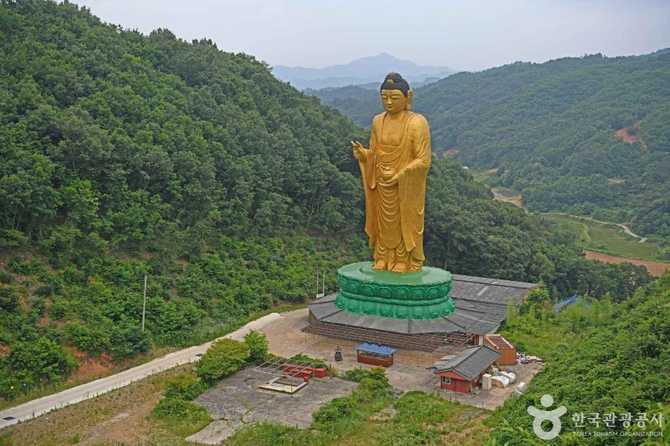
| 좌불상 (Seated Buddha Statue) | Height of 18 meters, the largest seated Buddha in Korea | Positioned outdoors, visible from afar, symbolizes peace and enlightenment |
| 기타 불상 및 전각 | Various large Buddha statues, stone lanterns, and pagodas | Distributed throughout the temple grounds, blending with nature |
Overall, the main structures at Sunggongsa showcase Korea’s rich Buddhist heritage, with a focus on outdoor spiritual spaces and large-scale Buddha statues. The temple’s design emphasizes harmony with nature, creating an immersive environment for visitors to connect with Buddhism and the natural surroundings.
Unique Features & Architectural Highlights of Sunggongsa
- Open-Air Layout: Unlike traditional enclosed temples, Sunggongsa’s structures are primarily placed outdoors, allowing visitors to walk among Buddha statues and pagodas in a natural setting.
- Largest Seated Buddha: The 18-meter tall seated Buddha is Korea’s largest, symbolizing peace and enlightenment, and is visible from afar, serving as the temple’s centerpiece.
- 천불전 (Heavenly Buddha Hall): Houses over 333,333 glowing Buddha images, creating a spectacular visual experience at night. The hall is used for prayer, meditation, and reflection.
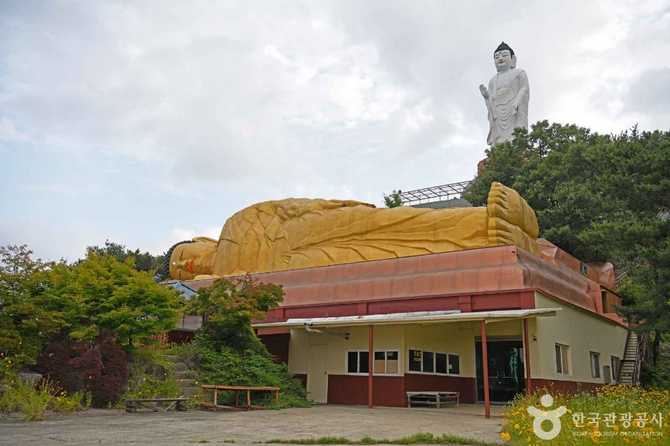
- Outdoor Buddha Statues: Numerous large Buddha statues and stone lanterns are placed throughout the temple grounds, integrated into the landscape to foster harmony with nature.
- Unique Architecture: The temple’s structures feature traditional Korean temple design elements, such as curved eaves and intricate woodwork, combined with modern construction techniques for durability and aesthetic appeal.
Visiting Sunggongsa Temple & Practical Tips
Planning your visit to Sunggongsa Temple ensures a smooth and meaningful experience. The temple is open year-round, offering free admission and ample parking facilities. To make the most of your trip, consider the following important information and recommendations:
| Aspect | Details |
|---|---|
| Operating Hours | 8:00 AM – 5:00 PM (Open daily) |
| Location | 371 Seonggok-gil, Useong-myeon, Gongju-si, Chungcheongnam-do |
| Admission & Parking | Free entry; free parking available on-site |
| Accessibility | Accessible by public transportation and car |
| Best Visiting Times | Spring and autumn for pleasant weather; early mornings or late afternoons for fewer crowds |
Tips for a Respectful and Enjoyable Visit
- Wear comfortable, weather-appropriate clothing and sturdy shoes suitable for outdoor walking.
- Arrive early in the day to enjoy a quieter atmosphere and better lighting for photos.
- Maintain silence or speak softly to preserve the tranquil environment.
- Follow temple etiquette: do not touch or climb on statues, and avoid loud conversations.
- Refrain from taking photos inside sacred areas unless explicitly permitted.
- Bring personal items such as water, sun protection, and personal hygiene supplies, especially in summer.
- Respect the natural surroundings by disposing of trash properly and not disturbing wildlife.
Checklist for Visiting Sunggongsa Temple
- Confirm operating hours and weather forecast before your visit.
- Wear comfortable shoes suitable for outdoor walking.
- Bring personal necessities: water, sun protection, and any required medications.
- Dress modestly and appropriately for a religious site.
- Prepare a camera or smartphone for photos outside, respecting restrictions inside sacred areas.
- Arrive early or during off-peak hours to enjoy a peaceful experience.
- Observe temple etiquette: speak quietly, do not disturb worshippers, and follow posted signs.
- Dispose of trash properly and avoid disturbing the natural environment.
- Check the temple’s official website or contact the management for any special events or closures.
- Plan your transportation route, considering public transit options or parking facilities.
Whether you visit during the day or evening, Discover Sunggongsa Temple is a meaningful stop on any Seoul itinerary for history-minded travelers.
Frequently Asked Questions (FAQ)
Q1: What are the opening hours and admission policies for Sunggongsa Temple?
Answer: Sunggongsa Temple operates year-round from 8:00 AM to 5:00 PM. Admission is free, and visitors can explore the outdoor grounds and main structures without any entrance fee.
Q2: How can I get to Sunggongsa Temple in Gongju?
Answer: The temple is located at 371 Seonggok-gil, Useong-myeon, Gongju-si, South Chungcheong Province. It is accessible by public transportation or car, with free parking available on-site for visitors.
Q3: What are the main attractions at Sunggongsa Temple?
Answer: The key attractions include Korea’s largest seated Buddha statue at 18 meters, the 천불전 (Heavenly Buddha Hall) with over 333,333 luminous Buddha images, and the outdoor layout of large Buddha statues and pagodas.
Q4: Are there any special rules or etiquette I should follow when visiting Sunggongsa?
Answer: Visitors should dress comfortably and respectfully, maintain a quiet and peaceful demeanor, and avoid taking photos inside sacred areas unless permitted. Proper temple etiquette is encouraged to preserve the tranquil environment.
Q5: Is there an entrance fee to visit Sunggongsa Temple?
Answer: No, admission to Sunggongsa Temple is free for all visitors, and parking is also provided at no cost.
Q6: Can I participate in any special programs or ceremonies at Sunggongsa?
Answer: Sunggongsa is known for its prayer and reflection spaces, such as the 천불전 for chanting and meditation. However, it does not currently offer organized special programs or guided ceremonies for visitors.
Final Tips for Visiting Sunggongsa Temple in Korea
When planning your trip to Sunggongsa Temple in Korea, it’s important to consider some practical tips to ensure a smooth and enriching experience. Since the temple’s structures are primarily outdoors, dressing appropriately for the weather is essential. Comfortable shoes are recommended for walking along the open-air pathways and exploring the various Buddha statues and pagodas scattered throughout the scenic grounds. Respect for the sacred environment is highly valued, so visitors should observe proper temple etiquette, such as speaking quietly and refraining from taking photos in restricted areas.
The best time to visit Sunggongsa Temple in Korea is during mild weather seasons like spring and fall, when the natural surroundings are especially beautiful. However, the temple is open year-round, offering free entry and ample parking facilities, making it accessible for spontaneous visits as well. Remember to carry personal essentials such as water, sunscreen, and a hat during sunny days, and be mindful of the peaceful atmosphere by keeping noise levels low. Whether you are here for meditation, sightseeing, or spiritual reflection, taking these simple precautions will help you fully appreciate the serenity and spiritual beauty that Sunggongsa Temple in Korea provides. Enjoy your visit and immerse yourself in Korea’s rich Buddhist heritage amidst stunning natural scenery.